 Zalo

Equipment differs by drink. Spirits need cooking or steaming of raw material, fermentation, distillation (reflux still or multi-plate column), aging, filtration and filling. Beer needs a brewing system, fermentation, cooling and can or bottle filling. Carbonated soft drinks need water treatment, syrup blending, CO₂ saturation and filling. For spirits, safety (methanol control, head and tail cuts) matters more than any machine: products must be lab-tested and comply with regulations.
Choosing the right equipment helps a beverage plant achieve stable quality, safety and optimized cost. Machinex Vietnam supplies equipment and lines for spirits, beer and soft drinks, including tower distillation projects such as a 200-liter-per-batch line in Lam Dong. This guide summarizes how to choose for each type of drink.
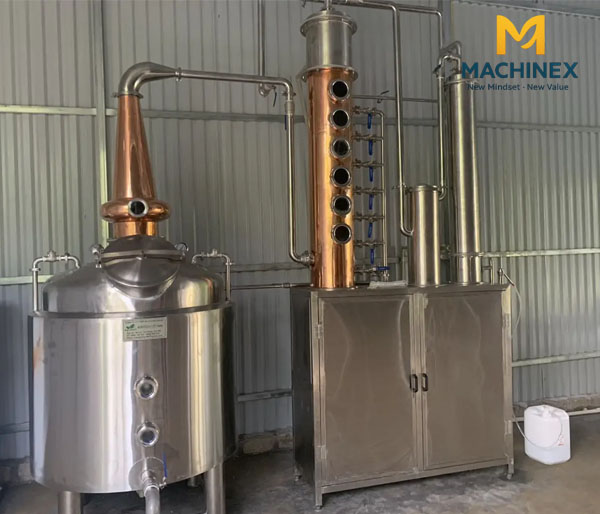
Copper-cap column and stainless steel pot still (Machinex)
Choosing equipment by drink
| Drink | Main process chain | Key equipment |
|---|---|---|
| Traditional spirits (rice, corn, cassava) | Steam or cook, ferment, distill, age, filter, fill | Rice steaming cabinet, cooking pot, fermentation tank, still or column, aging machine, storage tanks, filler |
| Fruit wine | Fruit preparation, fermentation, filtering, filling | Stainless fermentation tanks, filtration, filler |
| Craft or small-scale beer | Brewing (milling, mashing, boiling), cooling, fermentation, filling | Brewing system, heating boiler, cooling system, fermenters |
| Industrial beer | Brewing, fermentation, filtration, can or bottle filling | Brewing line, fermenters, automatic filler |
| Carbonated soft drinks | Water treatment, syrup blending, CO₂ saturation, filling, packing | Water treatment, blending tank, carbonation unit, filler, CO₂ recovery |
| Non-carbonated drinks (tea, herbal) | Extraction, blending, pasteurizing, filling | Extraction tank, pasteurizer, filler |
Equipment chain for a spirit plant
| Stage | Equipment | Selection note |
|---|---|---|
| Steaming and cooking raw material | Electric rice steaming cabinet, electric cooking pot (about 50 to 500 kg per batch) | Even cooking without scorching supports complete fermentation and saccharification |
| Fermentation | SUS 304 stainless fermentation tank with locking lid | Hygiene, temperature control |
| Distillation | 2-stage reflux still, multi-plate column, vacuum distillation | See the table below |
| Aging | Ultrasonic aging machine combined with magnetic fields (2 to 350 liters per batch) | Shortens the time needed to soften flavor compared with traditional aging |
| Filtration and impurity treatment | Filters, toxin filters, combined filtering and aging machines | Verify results with laboratory testing |
| Storage and filling | Stainless tanks, semi-automatic or automatic filler and capper, alcohol meter | Accurate dosing and hygiene |
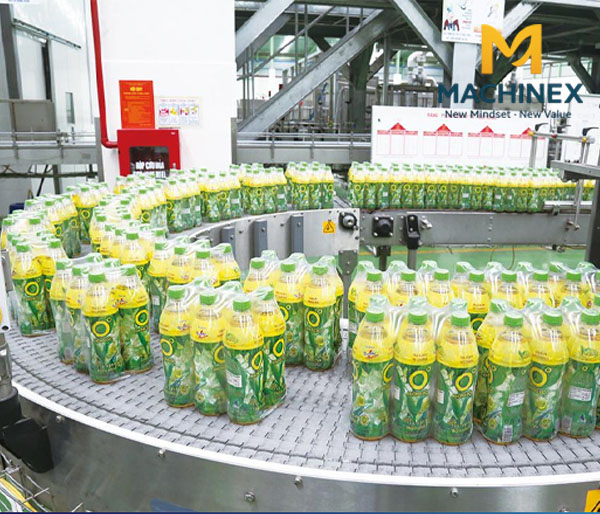
Bottled beverage filling and packing line (Machinex)
Spirit distillation equipment compared
| Equipment | Features | Best for | Notes |
|---|---|---|---|
| 2-stage reflux still (stainless or copper caps) | SUS 304 pot and heating jacket; indirect heating by electricity or steam; jacket rated by design | Small to medium plants needing good head and tail separation | Copper and stainless caps give different flavor character |
| European-style multi-plate column | Many fractionation plates, strong alcohol enrichment and impurity removal | Premium spirits, industrial scale | Higher investment; needs correct operation |
| Vacuum distillation (SUS 304 or 316L) | Low-temperature evaporation, closed and automatic | Heat-sensitive preparations | Specialized equipment |
Beer: choosing brewing and fermentation systems
A craft brewing system includes a brewhouse (turning malt sugars into wort yeast can ferment), a boiler supplying heat, a cooling system bringing wort to fermentation temperature, and fermenters where sugar becomes alcohol. Scale ranges from a mini brewing set to industrial lines with automatic can or bottle fillers. Define batch size, number of fermenters and the filling method.
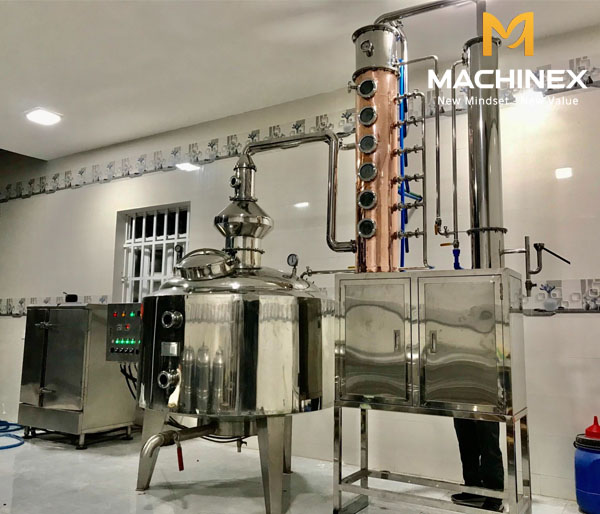
Spirit distillation system installed in a workshop (Machinex)
Carbonated soft drinks
The line covers water treatment, syrup blending, CO₂ saturation, filling and packing. Larger plants can recover CO₂ to cut gas purchase cost and emissions. Control of Brix, CO₂ level and filling-area hygiene decide quality.
Safety and compliance in spirit production
- Methanol and impurities: control raw material, fermentation and head and tail cuts during distillation. Filtering or aging equipment does not replace proper distillation and testing.
- Measuring alcohol: use suitable instruments (for example an alcohol meter with a range of about 0 to 80% and a minimum scale of 0.5%).
- Testing: send samples for methanol, aldehyde and the parameters required by regulation.
- Standards and licensing: comply with the technical regulation for alcoholic beverages where you produce (in Vietnam, QCVN 6-3:2010/BYT) and licensing rules; confirm the current version with the authority.
- Materials: food-grade stainless steel, smooth welds, easy cleaning.
Questions to send suppliers
- Real capacity and alcohol yield for my raw material?
- Still type, materials and working pressure?
- Measurement, temperature control and head-and-tail cut support?
- Aging and filtration equipment: how does it work and how can results be verified?
- Stainless steel grade, hygiene standard and technical documents?
- Trial run, acceptance, training and warranty?
Related reading
- Tower-type spirits distillation project in Lam Dong
- CO₂ recovery system for carbonated beverage lines
- Bottled water production line: treatment, RO and filling
- FAT and SAT checklist for plant acceptance
Frequently asked questions
Should I choose a reflux still or a multi-plate column?
A 2-stage reflux still suits small to medium plants; a multi-plate column suits larger premium production but costs more.
Can a toxin filter replace head and tail cuts?
No. Head and tail cuts during distillation and laboratory testing remain mandatory. Filtering or aging equipment only supports quality improvement and must be verified by testing.
What does a craft brewing system include?
A brewhouse that converts malt sugars, a heating boiler, a wort cooling system and fermenters.
What stages does a carbonated soft drink line need?
Water treatment, syrup blending, CO₂ saturation, filling and packing, optionally with CO₂ recovery.
Does Machinex design spirit, beer and soft drink lines to order?
Yes. Machinex Vietnam designs, fabricates, installs and commissions equipment and lines for spirits, beer and soft drinks to your capacity and raw material, such as the 200-liter-per-batch tower line in Lam Dong.
Need consulting, a site survey or a quotation? Contact us via Zalo / Viber / WhatsApp / WeChat: 0982786789 (+84 982 786 789)
Related news
- Industrial Drying Technologies Compared: Hot Air, Heat Pump (Cold), Freeze, Vacuum Microwave and Spray Drying
- Fruit Juice Production Line: Process, Equipment List and How to Calculate Capacity
- GMP-Oriented Herbal Extraction and Concentration Line: Design, Equipment and Cost Factors
- Bottled Water Production Line: Water Treatment, RO, Ozone/UV, Aseptic Filling and How to Size It