 Zalo

A herbal extraction and concentration line covers material receiving and inspection, cleaning, size reduction, solvent extraction (water, ethanol, glycerin), filtration, low-temperature vacuum concentration, drying or powdering if needed, solvent recovery and packing. Designing toward GMP means zoning the plant, using hygienic stainless steel, easy-to-clean (CIP) layouts and complete technical and validation records. Cost depends on capacity, extraction method, automation, solvent recovery and documentation.
Herbal extracts, botanical essences and standardized actives are key raw materials for pharmaceuticals, dietary supplements and natural cosmetics. For stable products that meet partner requirements, a line must protect heat-sensitive actives, prevent cross-contamination and be able to prove its process. This guide explains how to design and choose a GMP-oriented herbal extraction and concentration line.
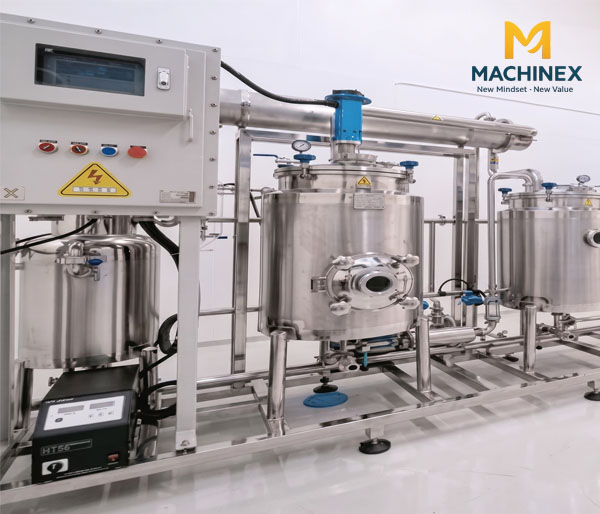
Stainless steel herbal extraction and concentration system (Machinex)
Main stages and equipment
| Stage | Typical equipment | Purpose |
|---|---|---|
| 1. Receiving and inspection | Scales, sampling area, raw material store | Confirm species, impurities and moisture |
| 2. Cleaning and size reduction | Washer, dryer, slicer, grinder | Increase contact area, remove impurities |
| 3. Extraction | Extraction tank (heated, agitated), ultrasonic or vacuum extraction | Dissolve actives into the solvent |
| 4. Filtration and clarification | Coarse and fine filters, membranes, centrifuge | Remove residue and sediment |
| 5. Concentration | Low-temperature vacuum concentrator | Raise concentration while limiting degradation |
| 6. Drying or powdering (if needed) | Spray dryer, vacuum belt dryer, freeze dryer | Turn liquid extract into powder |
| 7. Solvent recovery | Condensing and recovery distillation system | Reuse ethanol, cut cost and emissions |
| 8. Packing and retained samples | Packing machine, clean room | Storage and traceability |
Extraction methods compared
| Method | How it works | Best for | Notes |
|---|---|---|---|
| Maceration, percolation | Solvent soaks through the material at low temperature | Heat-sensitive actives, flexible scale | Long time, uses more solvent |
| Heated or reflux extraction | Solvent is heated and may recirculate | Common herbs, high throughput | Heat can reduce sensitive actives |
| Ultrasound-assisted extraction | Ultrasonic waves break cells and boost mass transfer | Shorter time, high yield at low temperature | More expensive equipment; parameters need optimizing |
| Vacuum extraction | Extraction under reduced pressure | Preserves essences, limits oxidation | Needs sealed equipment and stable vacuum |
Choosing the solvent
| Solvent | Used for | Notes |
|---|---|---|
| Water | Water-soluble actives, polysaccharides | Microbes grow easily; process quickly |
| Ethanol (water-ethanol mixtures) | Flavonoids, alkaloids and many alcohol-soluble actives | Needs recovery and fire and explosion safety |
| Glycerin | Liquid botanical preparations | High viscosity, harder to filter and concentrate |
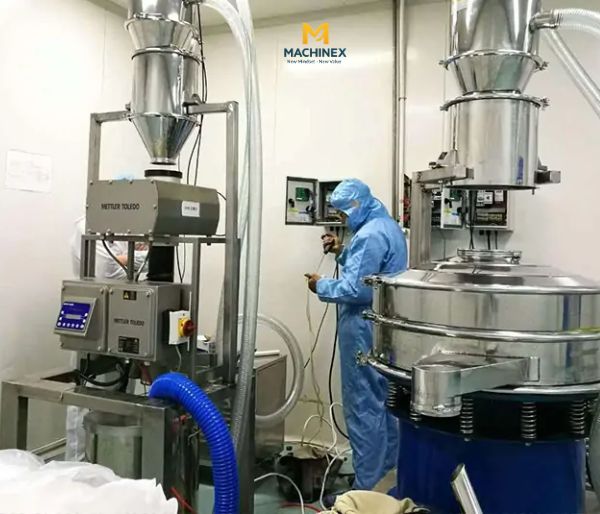
Clean production area in a herbal plant (Machinex project)
Designing toward GMP: what to include
- Zoning and flow: separate raw, processing and finished-product areas; one-way people and material flow to avoid cross-contamination.
- Materials: product-contact parts in stainless steel (typically SUS 304 or SUS 316L), smooth surfaces, polished welds, no dead legs.
- Cleaning: sanitary piping, clamp connections, clean-in-place (CIP) support and full drainability.
- Automation and data: control of temperature, pressure and time; batch data for traceability.
- Documents and validation: drawings, specifications, and installation, operational and performance qualification; acceptance testing (FAT).
- Safety: explosion protection when using ethanol, safety valves and ventilation.
Note: "designed toward GMP" is not the same as a GMP-certified plant. Certification depends on the whole facility, quality management system and the assessing body.
What drives investment cost
- Capacity (kg of raw material per batch) and batches per day.
- Extraction method (ultrasonic and vacuum cost more than a standard extraction tank).
- Stainless steel grade (304 or 316L) and surface finish.
- Whether solvent recovery is included.
- Drying after concentration (spray, vacuum or freeze drying).
- Level of automation, CIP and validation documents.
- Utilities: steam, cooling water, power, compressed air.
Questions to send suppliers
- Which extraction method suits my actives, and why?
- Tank volume, cycle time and expected extraction efficiency after trial?
- Achievable concentration temperature and vacuum level?
- Solvent recovery and explosion-safety measures?
- Materials, surface finish and CIP capability?
- Technical documents, FAT and validation support?
- Training, warranty and spare parts?
Related reading
- How to choose an industrial essential oil distillation system
- Industrial drying technologies compared
- FAT and SAT checklist for plant acceptance
- Strengths of Machinex Vietnam
Frequently asked questions
What stages does a herbal extraction and concentration line include?
Material receiving, cleaning and size reduction, extraction, filtration, vacuum concentration, drying or powdering if needed, solvent recovery and packing.
Why concentrate at low temperature?
Vacuum lowers the boiling point so concentration can run at low temperature, limiting the breakdown of heat-sensitive actives.
Does a GMP-oriented design mean the plant is GMP-certified?
No. A GMP-oriented design helps meet the requirements, but GMP certification belongs to the whole facility and its quality management system.
Does Machinex design extraction and concentration lines to order?
Yes. Machinex Vietnam designs, fabricates, installs and commissions herbal extraction and concentration lines to your capacity and actives.
Need consulting, a site survey or a quotation? Contact us via Zalo / Viber / WhatsApp / WeChat: 0982786789 (+84 982 786 789)
Related news
- Cashew, Jackfruit and Mango Processing and Drying Lines for Export: Process, Equipment and Quality Requirements
- Spirits, Beer and Soft Drink Equipment: How to Choose Distillation Columns, Aging Machines, Toxin Filters and Filling Lines
- Turnkey Solutions for Food, Beverage, Post-Harvest Agriculture and Herbal Processing Plants
- How to Choose an Industrial Essential Oil Distillation System: 10 Criteria and Comparison Tables